
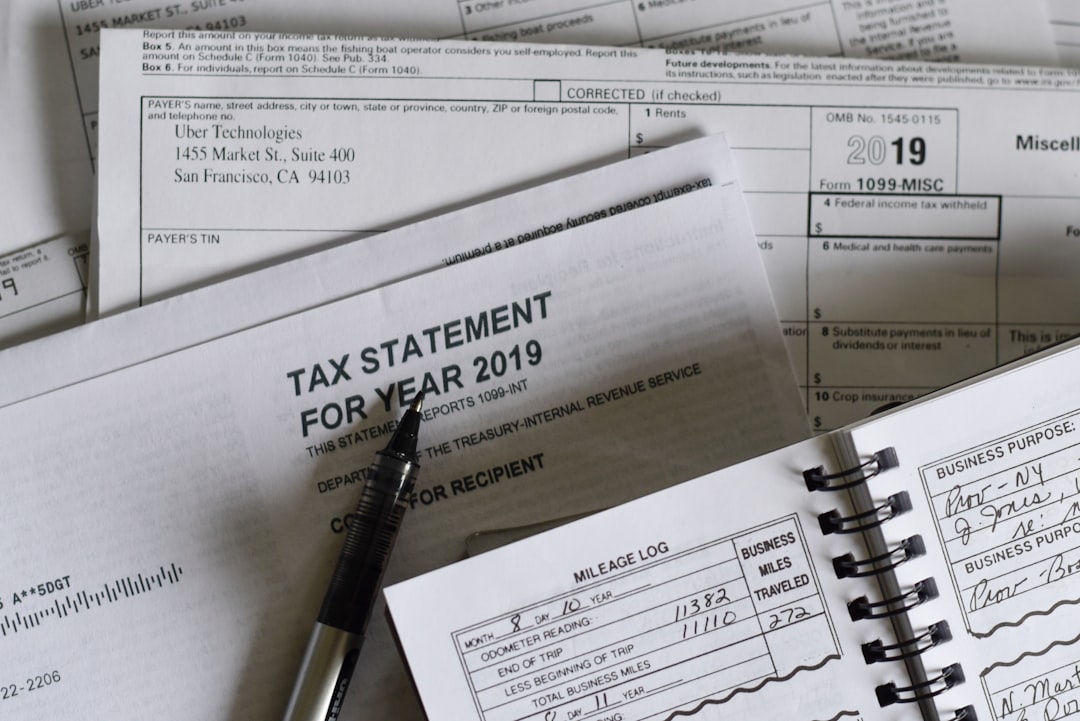
Missing Tax Documents? A 2024 Guide
Key Takeaways
* **W-2 Issues?** Contact your employer first. They can reissue it. * **IRS Transcript:** Get your tax data directly from the IRS if all else fails. * **Form 4852:** If you can't get a W-2, estimate your income and file using Form 4852 to meet the April 15th deadline. * **Penalties:** Filing late can cost you 5% of the unpaid taxes each month, up to a maximum of 25%.
As a CPA advising small businesses for years, I've seen the panic that sets in when tax documents go missing. Missing a W-2 or 1099 doesn't have to derail your tax filing. This guide provides actionable steps to locate those documents and avoid penalties.
What to Do When You're Missing Tax Documents in 2024
It's February, and you're ready to file your taxes, but your crucial tax documents are nowhere to be found. Don't worry, you're not alone. Here's a step-by-step guide to help you recover your missing tax documents and file your return on time.
1. Identify What's Missing
Before you start searching, make a list of the documents you should have received. Common documents include:
- Form W-2: From your employer, reporting your wages and taxes withheld.
- Form 1099-NEC: For independent contractors, reporting non-employee compensation over $600.
- Form 1099-MISC: For various payments, including rents, royalties, and other income over $600 (though its use is decreasing as 1099-NEC takes over).
- Form 1099-K: For payment card and third-party network transactions exceeding $20,000 and more than 200 transactions.
- Form 1099-INT: From banks and other financial institutions, reporting interest income over $10.
- Form 1099-DIV: Reporting dividends and distributions.
- Form 1099-B: Reporting proceeds from broker and barter exchange transactions.
- Form 1099-R: Reporting distributions from pensions, annuities, retirement or profit-sharing plans, IRAs, insurance contracts, etc.
- Schedule K-1: From partnerships, S corporations, estates, and trusts, reporting your share of income, deductions, and credits.
2. Contact the Payer (Employer, Client, Bank, etc.)
Your first step should always be to contact the entity that should have sent you the document. A simple email or phone call can often resolve the issue. Most employers and payers keep records and can easily reissue the document.
- W-2: Contact your employer's HR or payroll department. Many companies now use online portals like ADP or Gusto where you can download your W-2 directly. See our guide on payroll error prevention for tips on avoiding W-2 mistakes.
- 1099-NEC/MISC: Contact the client or company that paid you. If you provided services as a freelancer, double-check your records to see who paid you more than the $600 threshold.
- 1099-INT/DIV/B: Contact your bank, brokerage firm, or other financial institution. Most provide online access to these forms.
"I've personally seen cases where a simple phone call to the employer's payroll department resolved the issue immediately. Often, it's a matter of an incorrect address or a document being overlooked." - [Your Name], CPA
3. Check Online Accounts
Many employers, banks, and brokerage firms now offer electronic delivery of tax documents. Check your online accounts for downloadable copies. This is especially true if you opted for paperless delivery. Review your email for notifications about tax document availability. Solutions like QuickBooks Pro Plus often integrate with banks to automatically import 1099 data, streamlining the process.
4. Contact the IRS
If you've contacted the payer and still haven't received your document, you can contact the IRS. However, the IRS prefers you to contact the payer first.
- Call the IRS: You can call the IRS at 1-800-829-1040. Be prepared to provide your Social Security number, address, and other identifying information. Have details about the payer available, such as their name, address, and phone number.
- IRS Website: The IRS website (IRS.gov) offers a wealth of information and resources. You can find answers to many common questions and download forms and publications.
5. Request a Wage and Income Transcript from the IRS
If you are unable to get your W-2 from your employer, you can request a "wage and income transcript" from the IRS. This transcript summarizes the information reported to the IRS by your employer. You can request a transcript online, by phone, or by mail.
- Online: Use the IRS's Get Transcript tool (IRS.gov). You'll need to verify your identity through a secure access process.
- By Phone: Call 1-800-908-9946.
- By Mail: Use Form 4506-T, Request for Transcript of Tax Return. Mail it to the address listed on the form for your state.
The IRS transcript shows data reported to the IRS, but it's not a substitute for the actual W-2. It is a good alternative if you cannot get the actual document.
6. File Form 4852 as a Last Resort
If you've exhausted all other options and still can't get your W-2, you can file Form 4852, Substitute for Form W-2, Wage and Tax Statement. This form allows you to estimate your wages and taxes withheld. Be as accurate as possible when completing the form. Include any pay stubs or other documentation you have to support your estimates.
Important: Filing Form 4852 may increase your chances of an IRS audit. The IRS may investigate the discrepancy between your estimated information and the information reported by your employer. Be prepared to provide documentation to support your estimates. Refer to IRS Publication 535 for more details on recordkeeping.
7. File an Extension If Necessary
If you're still waiting for tax documents and can't file your return by the April 15th deadline, file Form 4868, Application for Automatic Extension of Time to File U.S. Individual Income Tax Return. This gives you an additional six months to file your return. However, it does not extend the time to pay your taxes. You must still estimate your tax liability and pay any taxes due by the April 15th deadline to avoid penalties and interest. See our guide on 2024 tax filing for more on extensions.
State-Specific Considerations
Tax rules and procedures can vary by state. For example:
- In California: If you're missing a W-2, you should also contact the California Employment Development Department (EDD) if you suspect your employer is not reporting wages correctly.
- States like Texas and Florida: These states have no state income tax, so the impact of missing federal tax documents is the primary concern.
Always check your state's tax agency website for specific instructions and forms.
Penalties for Late Filing and Late Payment
The IRS imposes penalties for filing your return late and for paying your taxes late. The penalty for filing late is 5% of the unpaid taxes for each month or part of a month that the return is late, up to a maximum of 25%. The penalty for paying late is 0.5% of the unpaid taxes for each month or part of a month that the payment is late, up to a maximum of 25%. Interest also accrues on unpaid taxes. Avoid these penalties by filing on time, even if you have to file an extension, and by paying your taxes on time, even if you have to estimate your liability.
Record Keeping for Tax Documents
Maintaining organized records is crucial for tax compliance. I advise my clients to keep all tax-related documents for at least three years from the date you filed your return or two years from the date you paid the tax, whichever is later. For example, if you file your 2023 tax return on April 15, 2024, keep all related documents until at least April 15, 2027. Consider using cloud storage or scanning documents for safekeeping. Bookkeeping software like Xero allows you to attach documents directly to transactions, making record-keeping much easier. Also, be sure to take advantage of available tax deductions & refunds.
Is Your Business Fully Compliant?
Don't risk penalties! Get a FREE compliance audit checklist tailored to your business type and location.
🔒Your information is secure and will never be shared.
Tools for Tax Preparation
Several tools can assist you in preparing and filing your taxes, even if you're missing some documents. These include:
- Tax Software: TurboTax, H&R Block, and TaxAct are popular options for individuals and small businesses. They offer guidance and can help you identify deductions and credits.
- Accounting Software: QuickBooks, Xero, and FreshBooks can help you track your income and expenses throughout the year, making tax preparation easier. These solutions can also aid in preparing for IRS tax challenges 2026.
- Tax Professionals: A CPA or tax advisor can provide personalized guidance and help you navigate complex tax issues. They can also assist with franchise bookkeeping taxes or other specific scenarios.
Understanding Form 1099-K Changes
Keep in mind the changes to Form 1099-K reporting thresholds. While the original threshold was $20,000 in gross payments and over 200 transactions, the IRS has delayed the implementation of the lower $600 threshold. For the 2023 tax year, the old rules apply. Be sure to stay updated on these changes, especially if you're an online seller. For more information, refer to our guide on 1099-K form.
Standard Deduction and Other Considerations
Remember to consider the standard deduction when filing your taxes. For the 2023 tax year, the standard deduction for single filers is $13,850, and for married filing jointly, it's $27,700. If your itemized deductions exceed the standard deduction, you should itemize. Be sure to keep track of all potential deductions, including business expenses, charitable contributions, and medical expenses. Also, be aware of potential IRS data security risks and take steps to protect your information.
html
| Document | What to Do If Missing | IRS Form (If Applicable) |
|---|---|---|
| W-2 | Contact employer, request online access, request IRS wage and income transcript | Form 4852 |
| 1099-NEC | Contact payer, check online accounts | N/A |
| 1099-MISC | Contact payer, check online accounts | N/A |
| 1099-INT/DIV/B | Contact bank/brokerage, check online accounts | N/A |
| Schedule K-1 | Contact partnership/S corp/estate/trust | N/A |
Losing tax documents can be stressful, but by following these steps, you can minimize the impact and ensure you file your taxes accurately and on time. Don't hesitate to seek professional help from a CPA or tax advisor if you need further assistance. You can even use QuickBooks business loans to fund your tax payments if needed.
FAQs
How long do I have to file my taxes in 2024?
The tax deadline is typically April 15th. If April 15th falls on a weekend or holiday, the deadline is extended to the next business day. You can file for an extension using Form 4868, which gives you an additional six months to file, but you still need to pay your estimated taxes by the original deadline. See our guide on IRS quarterly estimated tax payments for more info.
What is the penalty for filing taxes late?
The penalty for filing late is 5% of the unpaid taxes for each month or part of a month that the return is late, up to a maximum of 25%. Interest also accrues on unpaid taxes. So, if you owe $1,000 and file two months late, the penalty would be $100 (5% x $1,000 x 2).
What if I filed Form 4852 and later receive my W-2?
If you filed Form 4852 and later receive your W-2, you should amend your tax return using Form 1040-X, Amended U.S. Individual Income Tax Return. Include a copy of your W-2 with your amended return.
What is the reporting threshold for Form 1099-NEC?
The reporting threshold for Form 1099-NEC is $600. If you paid an independent contractor $600 or more during the year, you must file Form 1099-NEC to report the payment. For more information, see our guide on W-2 vs 1099 forms.
What if my employer refuses to provide me with a W-2?
If your employer refuses to provide you with a W-2, contact the IRS immediately. The IRS can contact your employer and request the W-2 on your behalf. You can also file Form 4852 as a substitute. Reporting IRS tax fraud is also an option if you suspect wrongdoing.
How long should I keep my tax documents?
You should keep your tax documents for at least three years from the date you filed your return or two years from the date you paid the tax, whichever is later. Some documents, such as those related to property or investments, should be kept longer. This is a key part of bookkeeping basics.
Where can I find more information about my state's tax rules?
You can find more information about your state's tax rules on your state's tax agency website. Search online for "[your state] tax agency" to find the official website. For example, see our guide on DC tax filing for information specific to Washington D.C.
What if I suspect my identity has been stolen and used to file a fraudulent tax return?
If you suspect your identity has been stolen and used to file a fraudulent tax return, contact the IRS immediately. File Form 14039, Identity Theft Affidavit, to report the identity theft. You should also contact the Federal Trade Commission (FTC) and file a report.
What happens if I don't file taxes because I'm missing documents?
If you don't file your taxes by the deadline (or extended deadline), you'll likely face penalties and interest. The IRS may also take collection actions, such as garnishing your wages or levying your bank account. It's always best to file, even if you have to estimate your income and expenses. See our guide on correcting W2/W3 forms if you make a mistake.
Remember, dealing with missing tax documents can be tricky. Consult with a qualified tax professional for personalized advice tailored to your specific situation. Also, be sure to explore potential tax credits for parents if applicable.
Disclaimer
This article is for educational purposes only and does not constitute professional legal, tax, or financial advice. The information is based on federal and state regulations which may change. Please consult a qualified CPA or tax advisor for specific advice.
Is Your Business Fully Compliant?
Don't risk penalties! Get a FREE compliance audit checklist tailored to your business type and location.
🔒Your information is secure and will never be shared.
Frequently Asked Questions
How long do I have to file my taxes in 2024?
The tax deadline is typically April 15th. If April 15th falls on a weekend or holiday, the deadline is extended to the next business day. You can file for an extension using Form 4868, which gives you an additional six months to file, but you still need to pay your estimated taxes by the original deadline. See our guide on [IRS quarterly estimated tax payments](/blog/us/irs-quarterly-estimated-tax-payments-guide) for more info.
What is the penalty for filing taxes late?
The penalty for filing late is 5% of the unpaid taxes for each month or part of a month that the return is late, up to a maximum of 25%. Interest also accrues on unpaid taxes. So, if you owe $1,000 and file two months late, the penalty would be $100 (5% x $1,000 x 2).
What if I filed Form 4852 and later receive my W-2?
If you filed Form 4852 and later receive your W-2, you should amend your tax return using Form 1040-X, Amended U.S. Individual Income Tax Return. Include a copy of your W-2 with your amended return.
What is the reporting threshold for Form 1099-NEC?
The reporting threshold for Form 1099-NEC is $600. If you paid an independent contractor $600 or more during the year, you must file Form 1099-NEC to report the payment. For more information, see our guide on [W-2 vs 1099 forms](/blog/us/w-2-1099-forms-guide).
What if my employer refuses to provide me with a W-2?
If your employer refuses to provide you with a W-2, contact the IRS immediately. The IRS can contact your employer and request the W-2 on your behalf. You can also file Form 4852 as a substitute. Reporting [IRS tax fraud](/blog/us/irs-tax-fraud-whistleblower-rewards) is also an option if you suspect wrongdoing.
How long should I keep my tax documents?
You should keep your tax documents for at least three years from the date you filed your return or two years from the date you paid the tax, whichever is later. Some documents, such as those related to property or investments, should be kept longer. This is a key part of [bookkeeping basics](/blog/us/us-bookkeeping-basics-small-business).
Where can I find more information about my state's tax rules?
You can find more information about your state's tax rules on your state's tax agency website. Search online for "[your state] tax agency" to find the official website. For example, see our guide on [DC tax filing](/blog/us/dc-tax-filing-guide) for information specific to Washington D.C.
What if I suspect my identity has been stolen and used to file a fraudulent tax return?
If you suspect your identity has been stolen and used to file a fraudulent tax return, contact the IRS immediately. File Form 14039, Identity Theft Affidavit, to report the identity theft. You should also contact the Federal Trade Commission (FTC) and file a report.
What happens if I don't file taxes because I'm missing documents?
If you don't file your taxes by the deadline (or extended deadline), you'll likely face penalties and interest. The IRS may also take collection actions, such as garnishing your wages or levying your bank account. It's always best to file, even if you have to estimate your income and expenses. See our guide on [correcting W2/W3 forms](/blog/us/correct-w2-w3-forms-guide) if you make a mistake.
Disclaimer
This article is for educational purposes only and does not constitute professional legal, tax, or financial advice. The information provided is based on US federal and state regulations which may change over time. We are not a licensed CPA firm or law office. Please consult a qualified professional for specific advice related to your situation.
Content researched and edited by humans with AI assistance. Focused on US accounting and bookkeeping.